Last updated November 21, 2026
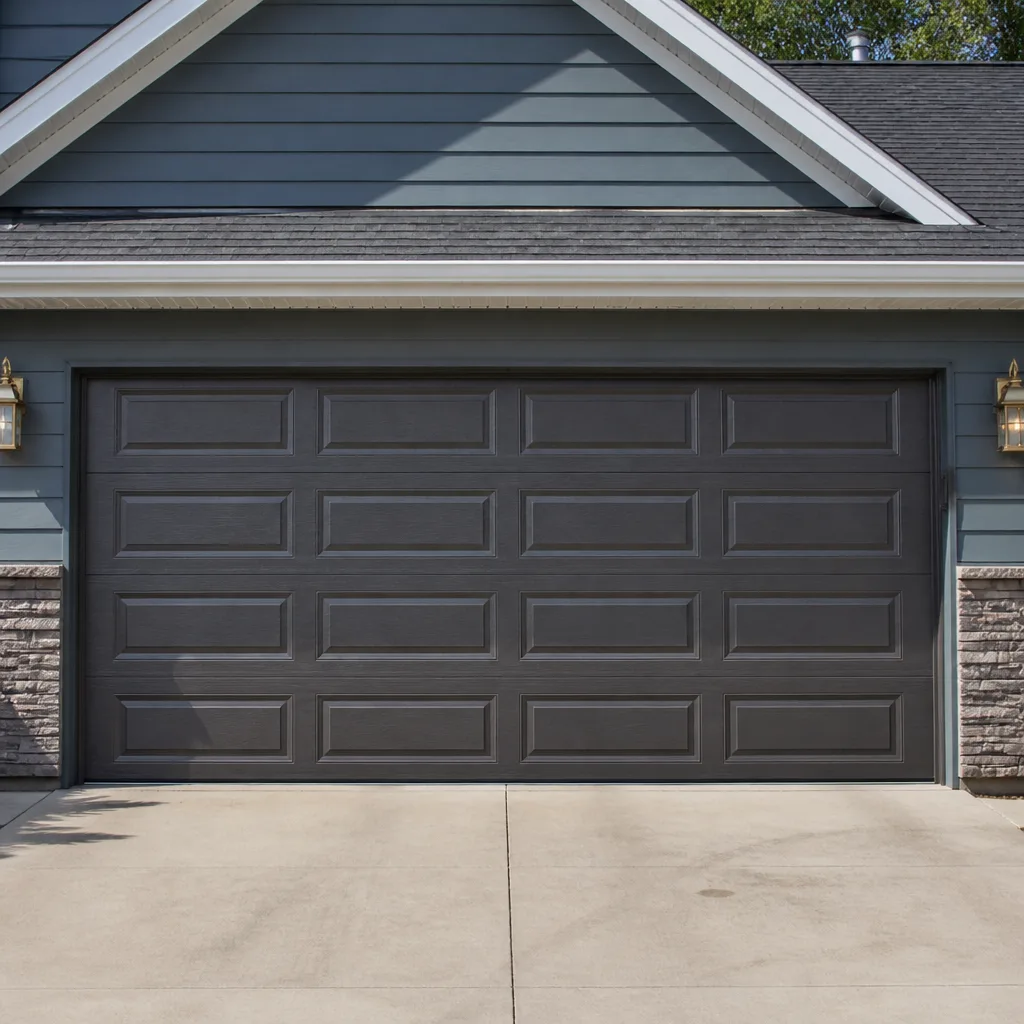 Raised-panel steel
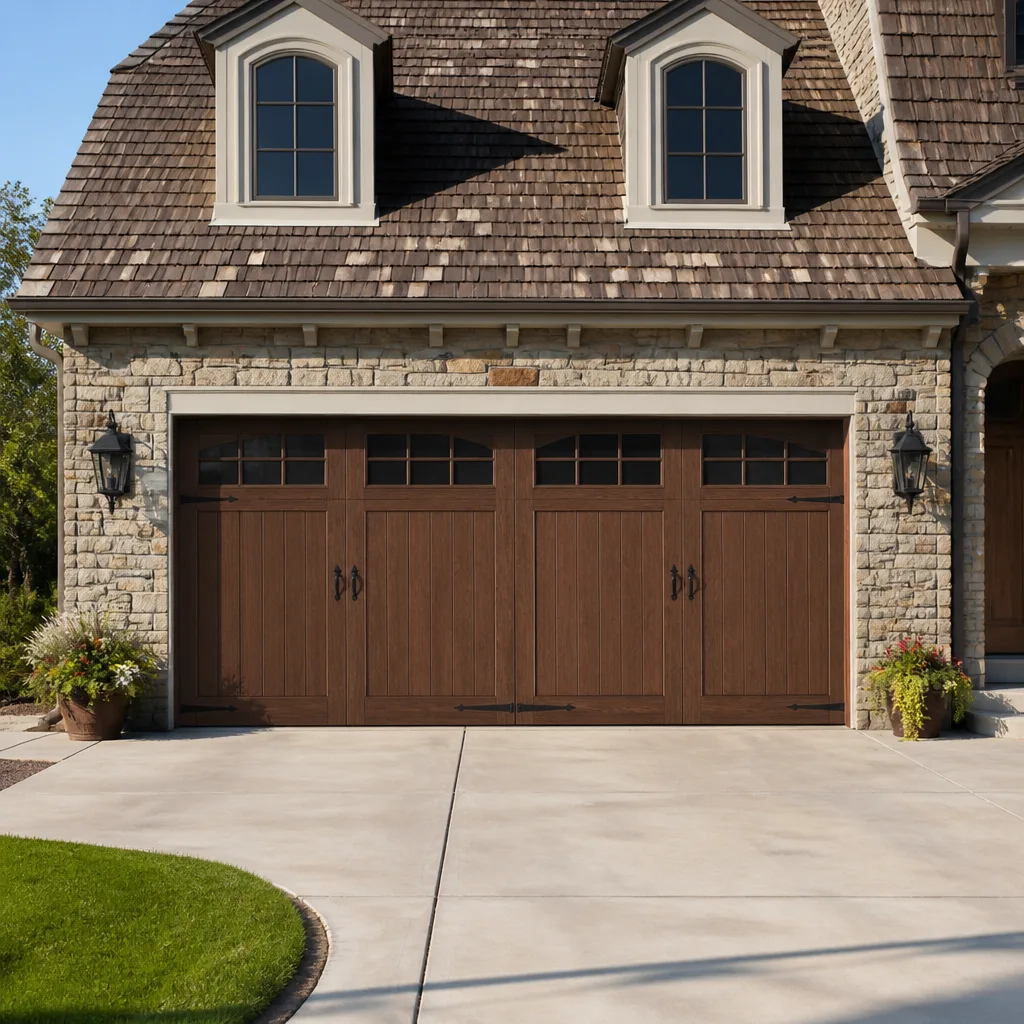 Carriage house
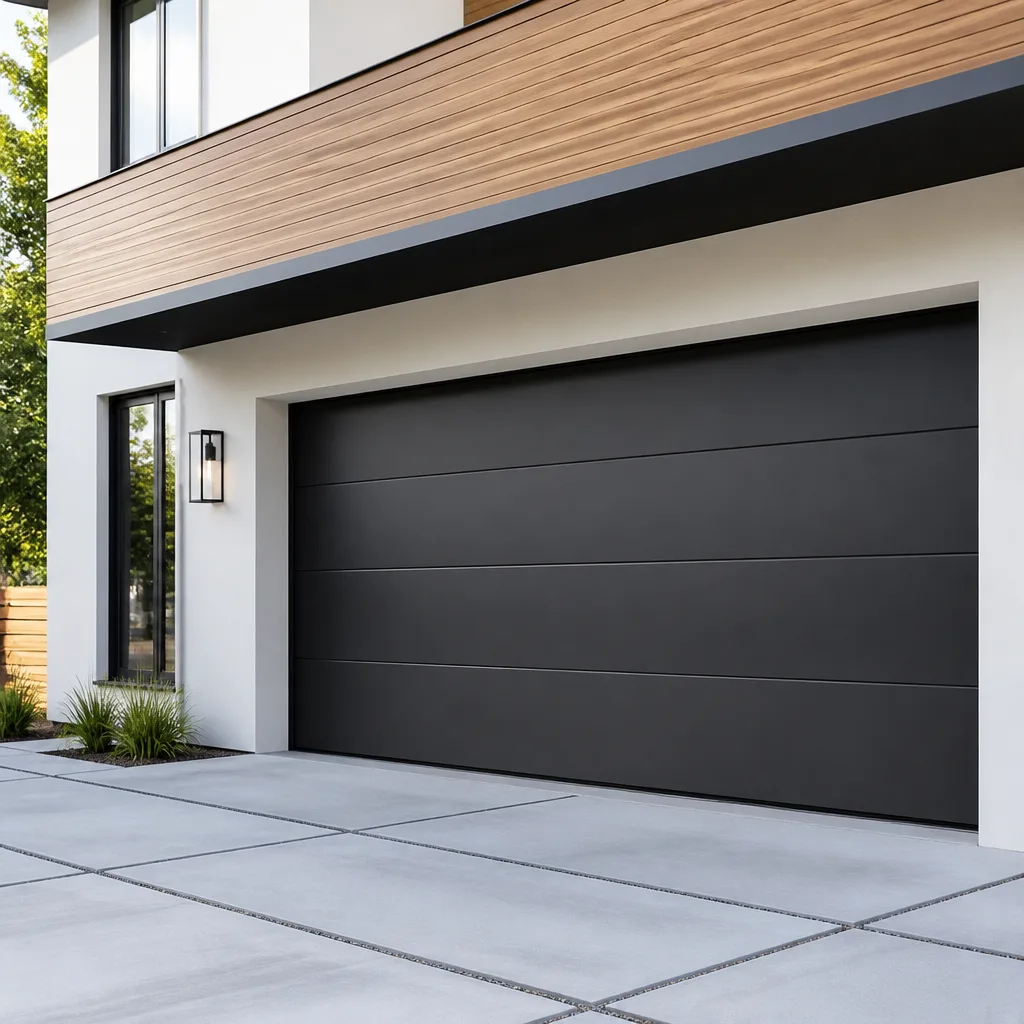 Modern flush
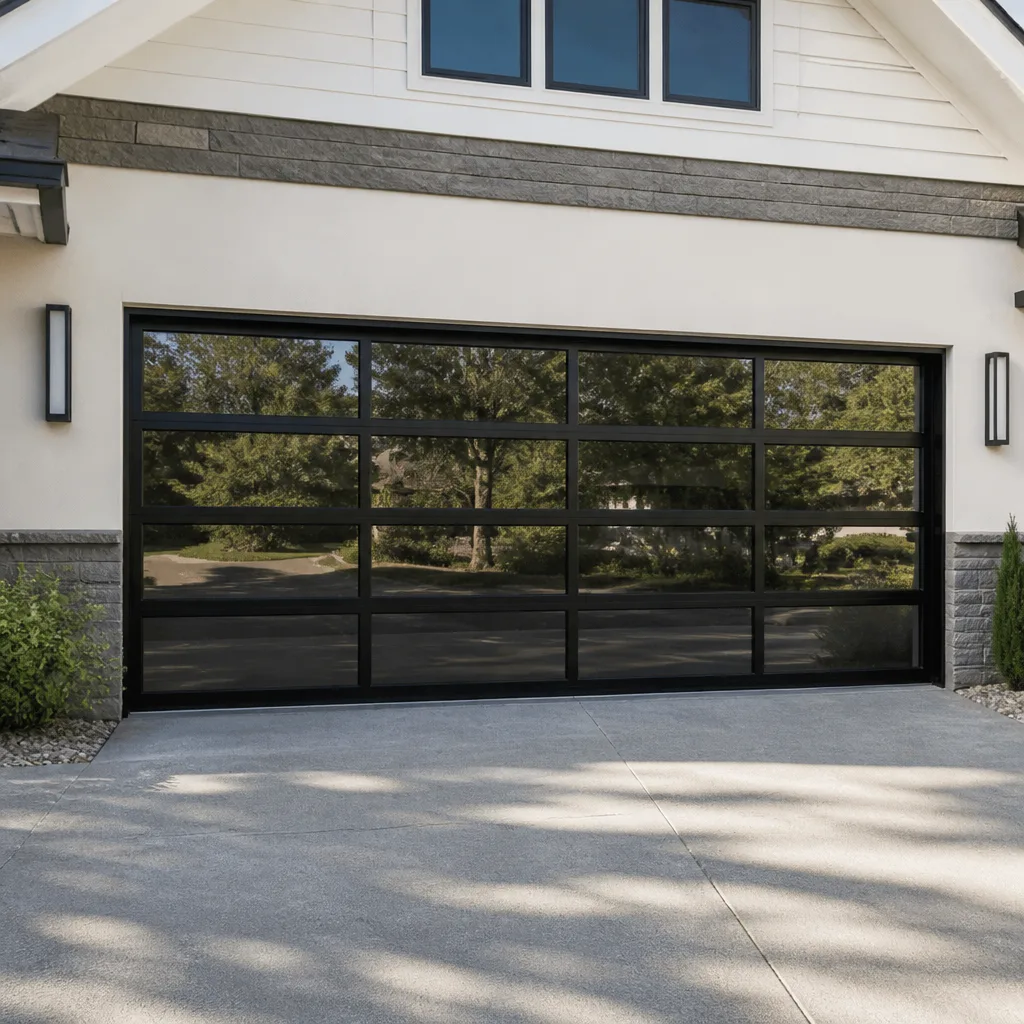 Full-view glass
 LiftMaster openers
 Chamberlain openers
Full 25-point door and opener safety check with every visit - springs, cables, rollers, tracks, and your LiftMaster or Chamberlain opener included
You get a price before we start. It does not change when the pro arrives.
Get your free estimateGarage Door Warning Signs: A Meriden Homeowner’s Reference Guide
A garage door that makes a new noise isn’t telling you one thing. It’s telling you one of at least eight different things, and the noise is only the messenger. The slow squeal of a dry roller, the sharp pop of a fatigued spring, and the grinding shudder of a worn opener gear all sound like “something’s wrong with the garage door” to a homeowner. To a technician, they point to three completely different repairs with three very different urgency levels. Get the diagnosis wrong in one direction and you overspend on a problem that needed ten minutes of lubrication. Get it wrong in the other and you ignore the visual warning of a spring that’s about to fail. This guide maps each warning sign to the component behind it, tells you whether to monitor it, schedule it, or call today, and gives you the cost picture for each. Meriden homeowners deal with a specific mix of freeze-thaw winters, humid summers, and older housing stock, and that context shapes what fails and when.
Quick Answer
Garage door warning signs fall into four categories: noise (grinding, popping, squealing, rattling), visual (gaps, sagging panels, cables off the drum), motion (uneven travel, jerking, reversing), and opener behavior (slow response, partial opening, unexplained reversal). The one category where “wait and see” is genuinely dangerous is the visual signs of imminent spring failure – stretched springs, a visible gap in the coil, or a door that’s suddenly much heavier than it was. Everything else can usually be scheduled. Spring failure cannot.
Styles & brands we work with
- Raised-panel steel
- Carriage house
- Modern flush
- Full-view glass
- LiftMaster openers
- Chamberlain openers
Table of Contents
- The Noise-to-Component Map
- The Signs of Imminent Spring Failure
- Track, Roller, or Cable: Decoding Uneven Door Travel
- What Your Opener Is Telling You
- The Severity Tiers: Monitor, Schedule, or Call Today
- Why Meriden Doors Fail the Way They Do
- Seasonal Patterns and What to Check Before Winter
- What You Can Check and What You Shouldn’t Touch
The Noise-to-Component Map
The single most useful diagnostic tool a homeowner has is the quality of the noise. Not the volume – the character. Four distinct sounds point to four distinct hardware failures, and once you can tell them apart, you’ve eliminated most of the guesswork before anyone even opens the door panel.
- Grinding: Usually the opener. Worn drive gears inside the motor housing, a stripped gear assembly, or in a chain-drive unit a chain that’s running dry and eating into the sprocket. Grinding that happens at a consistent point in the door’s travel often points to the opener’s internal gearing rather than the door itself.
- Popping: Torsion springs. A torsion spring is a wound coil under heavy load, and when the coil begins to fatigue or a section binds, it releases tension in small pops rather than a smooth rotation. Popping should never be filed under “normal.” It is one of the earliest audible warnings of spring failure.
- Squealing: Rollers. Steel rollers that have lost their bearing lubrication, or nylon rollers worn flat on one side, squeal as they travel through the track. Squealing is the most benign of the four, but left alone it accelerates roller wear and starts damaging the track surface.
- Rattling: Loose hardware. Hinges, brackets, and the bolts that hold the sections together work loose over thousands of open-and-close cycles. Rattling is often the cheapest fix on the list and the easiest to ignore too long.
One more sound worth naming: a sharp bang, a sound like a gunshot from inside the garage, followed by the door hanging or the opener running without lifting anything. That’s a spring that has already snapped. It’s not a warning sign anymore – it’s a failure that has happened. Stop using the door and call.
The reason noise diagnosis matters so much in our work is that the same door can produce two or three of these sounds at once, especially on an older system. A Meriden door that’s been through fifteen winters might have a squealing roller and a loose hinge and a spring that’s starting to pop, and the homeowner hears “the door sounds terrible” as one problem. Separating the sounds before the technician arrives saves time and often saves money, because you’re not paying to diagnose a rattle you could have described in a sentence.
The Signs of Imminent Spring Failure
Springs are the one component where waiting is genuinely dangerous. A torsion spring holds the entire weight of the door under load, and when it reaches the end of its cycle life it doesn’t degrade gracefully – it snaps, often loudly, and the door becomes unmanageable. This is the reason garage door spring repair is a named specialty for us rather than a line item. It’s the highest-tension, most safety-critical component on the whole system.
These are the visual and behavioral signals that a torsion spring is close to the end of its service life:
- A visible gap in the coil. Look at the torsion spring mounted on the shaft above the door. On a healthy spring the coil is even. A gap of an inch or more between coils means the spring has lost tension and is no longer carrying its share of the door weight.
- The door suddenly feels heavier by hand. If your opener is disengaged and the door takes real effort to lift where it used to be light, the spring is doing less of its job. (Do this only with the operator released and the door fully closed, and don’t force it.)
- The door won’t stay halfway open. A balanced door will hold its position when stopped midway. A door that drops on its own is telling you the spring is under-performing.
- Popping during travel. As noted above, popping from the spring area is a warning, not a quirk.
- Visible rust or heavy corrosion on the coils. Connecticut’s humid summers and freeze-thaw winters stress the metal. A rusted coil is a weakened coil.
What you should not do with any of this information is try to adjust, unwind, or replace a torsion spring yourself. This is the component where injuries happen. A torsion spring is wound to a specific number of turns under tension; releasing that tension incorrectly is fast, violent, and unforgiving. A trained technician has the winding bars, the door-specific calibration, and the knowledge of how many turns a door of your size and weight needs. If you see the warning signs above, stop using the door and get someone out.
On cost: a single spring replacement is typically quoted as a range per spring, and a matched pair – which is what most doors carry and what we almost always recommend replacing together – runs about twice that. A technician who replaces one spring and leaves its partner in place is sending you back to the same phone call in a year or two. The written estimate you get before any work starts will break out spring cost and labor separately.
Track, Roller, or Cable: Decoding Uneven Door Travel
A door that rises crooked, jerks, or rubs on one side is telling you one of three things, and the difference matters because one of them is a schedule-it repair and one is a stop-using-the-door repair.
Track problems show up as a door that binds at a specific height, or a visible bend or dent in the vertical or horizontal track. Tracks take hits from car bumpers, from kids, from a door that was opened into an obstruction. A slightly bent track can sometimes be straightened; a badly bent one has to be replaced. If the door pulls against the track at the same point every cycle, the track is the suspect.
Roller problems show up as a door that moves unevenly without binding – one side lagging slightly, a wobble at a particular section, or a visible flat spot on a roller’s edge. Rollers are the cheapest part on the system and among the most ignored. When one roller on a side seizes, the door drags on that side and the imbalance puts stress on the track, the hinges, and the opener.
Cable problems show up as visible slack in a lift cable, a cable that’s come off the drum, frays, or a door that’s noticeably higher on one side at rest. This is the one to treat as urgent. A lift cable under load can snap, whip, and do real damage or real injury, and a door hanging on a compromised cable is unstable. If you see a cable off the drum or a frayed cable, don’t run the door. Call it in as an emergency.
For Meriden homeowners with older doors, this three-way distinction is the one we get the most questions about, because a crooked door looks like one problem. The visible evidence – where it binds, whether there’s slack on a cable, whether a roller is flat – usually settles which of the three you’re dealing with before we even arrive. If your door is moving unevenly and you can’t tell which, describe what you see when you call and we can usually get you pointed toward the right repair over the phone.
What Your Opener Is Telling You
Modern openers are surprisingly communicative. A LiftMaster or Chamberlain unit that used to respond instantly and now hesitates, reverses at the halfway point, or opens your neighbor’s door instead of yours is signaling a specific failure with a specific fix. We work on both major smart-home ecosystems as well as the legacy brands many Meriden homes still run, and the behavior patterns below come up constantly.
- Slow response or delayed start. Usually a logic board or capacitor issue, especially on an opener that’s eight or more years old. It can also be a symptom of a binding door putting extra load on the motor, so the first check is whether the door moves freely by hand with the operator released.
- Reverse after a couple of inches. The safety reverse system is doing its job. On a LiftMaster or Chamberlain/MyQ unit, this often points to a misaligned safety sensor, a broken sensor wire, or obstruction in the light beam. On older Genie and Craftsman openers, it can also mean the limit switch is out of adjustment.
- Partial operation – opens a few feet then stops. Frequently a travel limit setting that’s drifted, or a door that’s grown heavier as a spring weakened. The opener is trying to lift more than it’s rated for and the force limiter is shutting it down. That’s a door problem masquerading as an opener problem.
- Opener runs but the door doesn’t move. The motor is turning but the door isn’t lifting. Common causes are a snapped spring (with the door now too heavy), a broken opener gear, or a disconnected emergency release cord pulled by accident. Check the release cord first; if it looks normal, suspect the spring.
- Remote works intermittently. Often a dying battery, but on a smart-home-integrated opener it can also be a WiFi link that’s dropped, a home network change, or an opener logic board on its way out. We’ve seen the MyQ app lose contact for reasons that had nothing to do with the door.
The one-line summary: a behavior change in your opener can come from the opener itself or from the door it’s attached to. Determining which one is the whole point of a diagnostics call. Detailed garage door opener repair can address the electronics, the sensors, the travel limits, or the drive mechanism. What it can’t fix is a door that’s too heavy – and homeowners almost never call the opener a “door problem,” which is why so many opener service calls turn into spring or track calls once we’re on site.
If you’ve got a newer smart opener and you’re wondering whether a behavior change is software or hardware, the quick test is whether the wall button and the app behave the same way. If both are slow, it’s hardware. If the wall button is instant and the app isn’t, it’s connectivity, and that’s a different conversation.
The Severity Tiers: Monitor, Schedule, or Call Today
The most useful thing this guide can do is stop you from overreacting to normal wear and from under-reacting to real danger. Here’s how we’d classify the warning signs a homeowner actually sees, with the honest reasoning for each.
| Warning Sign | Likely Component | Severity | Reasoning |
|---|---|---|---|
| Occasional squealing | Rollers | Monitor | Lubrication and eventual roller replacement. No safety risk short term. |
| Rattling hardware | Hinges and bolts | Monitor | Tighten or replace when convenient; can worsen over months. |
| Slow opener response | Opener electronics | Schedule | Rarely dangerous but tends to fail all at once eventually. Book it. |
| Grinding at a consistent point | Opener gearing | Schedule | Continuing to run it accelerates gear wear and can damage the door. |
| Uneven travel, one side lagging | Roller or track | Schedule | Puts uneven load on hinges and opener; worth a diagnostic soon. |
| Popping from the spring area | Torsion spring | Call today | Spring failure is imminent; stop cycling the door. |
| Gap in the coil, door feels heavy | Torsion spring | Call today | The spring has lost tension. Using the door risks the opener and you. |
| Cable off the drum, frayed, or slack | Lift cable | Call today | Compromised cable under load is a safety issue. Don’t run the door. |
| Door hanging after a loud bang | Snapped spring | Call today | Already failed. Emergency service territory. |
Two notes on this table. First, “monitor” means check it on a routine basis, not ignore it forever – a squealing roller that goes two years without attention has usually started eating the track. Second, an item can escalate. A track problem you’re monitoring is a schedule-it; the same track that bends and traps the door is a call-it. If you’re unsure whether something has escalated, describing the symptom to a technician on the phone takes two minutes and costs nothing.
If you’re in the “call today” column for any reason, our team can be reached directly and emergency service is available for situations that can’t wait for a scheduled appointment – a door that won’t close at night, a snapped spring, an off-track door after a bump. Emergency response is one of the reasons we keep the scope narrow: we’re a garage door specialist, not a generalist, which means the person who arrives actually diagnoses doors for a living.
Why Meriden Doors Fail the Way They Do
Meriden sits in a part of Connecticut that gets the full freeze-thaw treatment every winter. Water gets into a metal part, freezes overnight, expands, and lets go in the morning. Do that a few hundred times over the life of a door and you get wear patterns you don’t see in milder climates. It’s not a dramatic effect on any single part, but it shortens the life of anything that’s already marginal – a tired spring, a track with a slight bend, a hinge that’s lost a bolt.
What we see most in Meriden homes, neighborhood by neighborhood, is a fairly consistent picture. In the older housing stock around the downtown area and along West Main Street, doors that were installed decades ago are running original hardware – steel rollers, worn hinges, springs that have long since passed their rated cycle count. These are the doors that show two or three warning signs at once and where a full diagnostic is worth the call. Over by Hubbard Park and up toward the Westfield area, we see a lot of younger doors, but the failure mode is different: the door is fine and the opener, which has been listening to a binding door for years, is what finally gives out.
The East Side and South Meriden bring their own patterns. Homes there often have garages that face north or shade the door for most of the day, which means frost stays longer and thaw happens later, so track and roller wear is concentrated on one side. It’s not a big effect, but it’s a real one, and it’s why “the same door, but one side’s worse” is a common complaint in those neighborhoods.
If you’re on a Meriden street with a steep, shaded driveway where the garage sees long periods of moisture, a little more attention to the rollers and tracks in spring pays for itself. A quick look for rust on the tracks, and a wipe-down with a dry cloth, keeps the wear from compounding.
Seasonal Patterns and What to Check Before Winter
The single most useful thing you can do for a Meriden garage door is a checkup before the first hard freeze. A door that works fine in October can behave very differently in January, and the failure you find in October is a scheduled repair while the one you find in January is an emergency call on a cold morning when the car’s already running.
Here’s the pre-winter routine we’d recommend to any homeowner:
- Open and close the door slowly and listen. Get familiar with what normal sounds like. Any new grinding, popping, or squealing is worth noting now.
- Check the spring for a gap in the coil or visible rust. If you see either, stop and call. Don’t wait for the freeze.
- Look at the tracks. Any bend, dent, or rust spot. A dry track in October can bind in January.
- Test the safety reverse. Put a two-by-four or a rolled-up newspaper in the door’s path and close it. The door should reverse on contact. If it doesn’t, that’s a sensor or opener issue to address before anyone gets hurt.
- Lubricate the moving parts. Hinges, rollers, and the spring are the main points. A garage door lubricant is the right product – not WD-40, which is a solvent rather than a proper lubricant for this use.
- Run the door by hand with the opener released. A balanced door lifts easily and stays put midway. If it’s heavy, the spring is telling you something.
- Check the opener’s force settings and travel limits against the manual. On newer LiftMaster and Chamberlain units these are usually fine, but after a season of heavy use they can drift.
In the spring and summer, humid air and insect activity are the two seasonal factors to watch. Humidity shortens the life of metal hardware that’s already showing corrosion, and insects nest in the tight spaces around hinges and the opener’s sensor brackets. A quick inspection in early summer catches more than you’d expect.
What You Can Check and What You Shouldn’t Touch
We’re all for homeowners being able to describe the problem accurately when they call. It gets you a faster diagnosis and a better estimate. But there’s a line, and it’s drawn around the high-tension components.
Safe to do yourself: listening for new sounds, looking at the spring for a coil gap, looking at the tracks for bends, checking rollers for flat spots, testing the safety reverse with an obstruction, lubricating hinges and rollers, and replacing a dead remote battery. All of this is visual or low-risk.
Not safe: adjusting or unwinding a torsion spring, removing the spring, trying to re-spool a lift cable that’s come off the drum, or standing under a door that’s supported only by an opener with a snapped spring. These are the jobs where the forces at play are enough to cause serious injury, and they’re the ones we’d never walk a homeowner through over the phone. Adjusting the opener’s internal force settings yourself is also a good way to mask the real problem and cause more wear – if the door needs more force to move, that’s the signal, not something to override.
If you’re not sure which side of the line something falls on, describe it and ask. Nobody minds the question, and it’s a much better conversation than the one that starts with “so I was trying to take the spring off.”
What any of this looks like in rough cost terms: the garage door repair range in the Meriden market runs roughly from a couple of hundred dollars for a simple component fix up to the low four figures for a major repair with parts. A single spring replacement sits in the low-to-mid hundreds; a matched pair roughly doubles that. Opener repair or replacement ranges widely depending on whether it’s the electronics or the whole unit. Every one of those is quoted and agreed before any work starts, and the written estimate is the price – there’s no surprise line on the invoice at the end. If a technician finds something you didn’t know about while doing the job, they stop and talk to you before doing anything that changes the number.
Common Mistakes to Avoid
- Treating every noise as one problem. A squeal and a pop are two different repairs with two different urgency levels. Lumping them together usually means something dangerous gets deprioritized because it’s grouped with something harmless.
- Trying to fix a spring yourself. Torsion springs are under far more tension than most homeowners expect. The injury rate from DIY spring work is real and the repair is not complicated for someone with the right tools and calibration.
- Ignoring the “door feels heavier” signal. A door that needs two hands where it used to need one is a spring on the way out. Many Meriden homeowners find out when the opener burns out trying to compensate for a weak spring.
- Replacing one spring and leaving the partner. Springs are replaced in pairs for a reason. A worn spring and a new one put uneven load on the shaft and hinges, and you’re back to the same call in a year.
- Overriding the opener’s force limits. When the door needs more force, that’s the diagnostic signal. Turning up the force setting to get the door moving hides the real problem and accelerates wear on everything else.
- Skipping the pre-winter check. Most of the genuinely urgent repairs we see in Meriden in January were visible as monitoring-level items in October. The checkup is the cheapest repair you’ll ever do.
- Picking a generalist handyman for a door problem. Garage doors have a specific set of failure modes and a specific set of brand-specific parts. A garage door specialist diagnoses faster because they see these failures every week.
See the difference
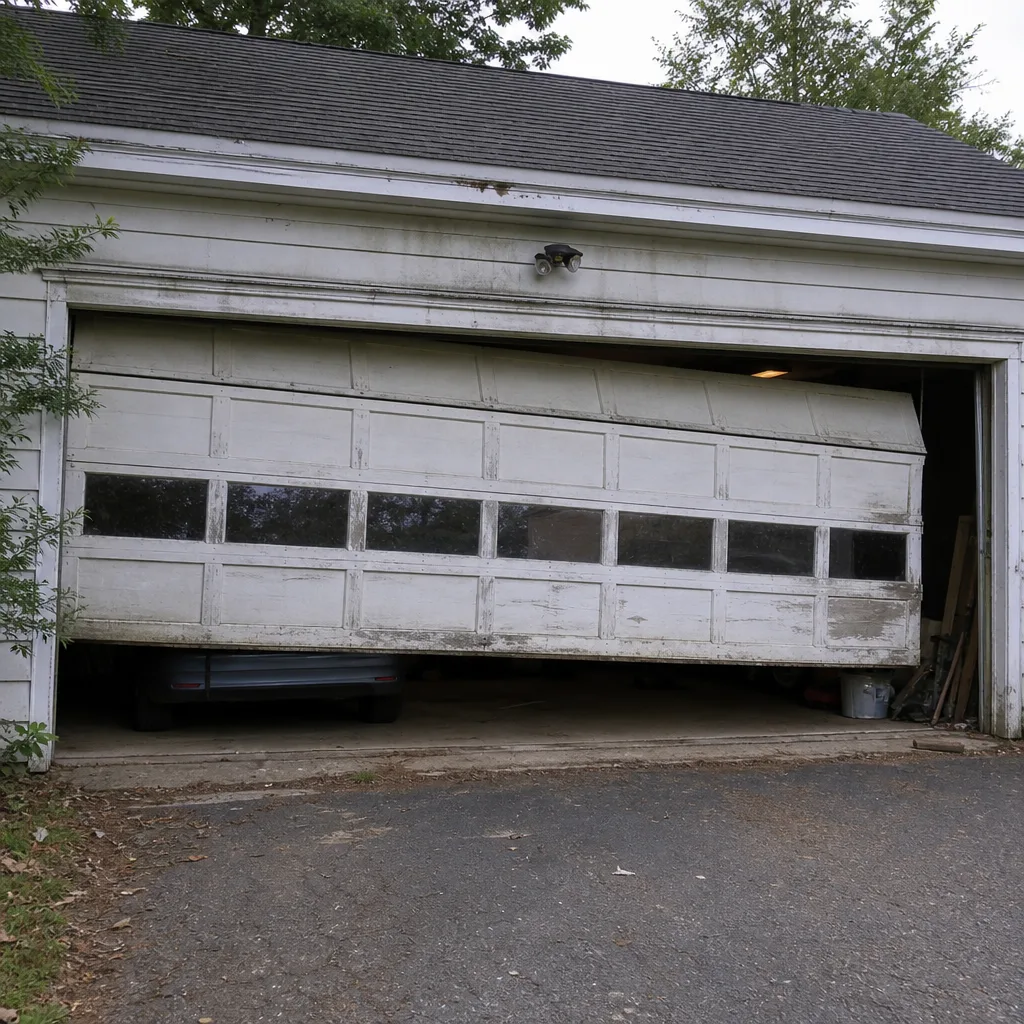 Before
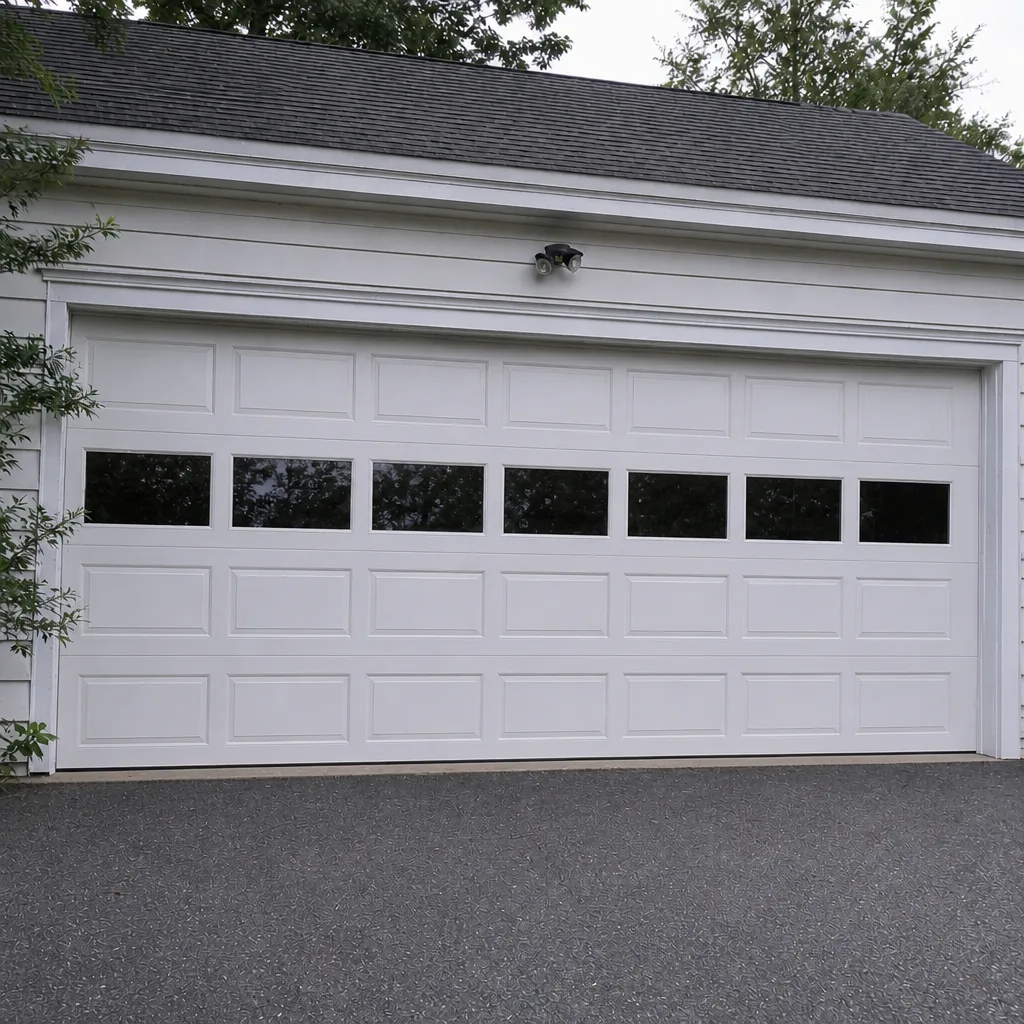 After
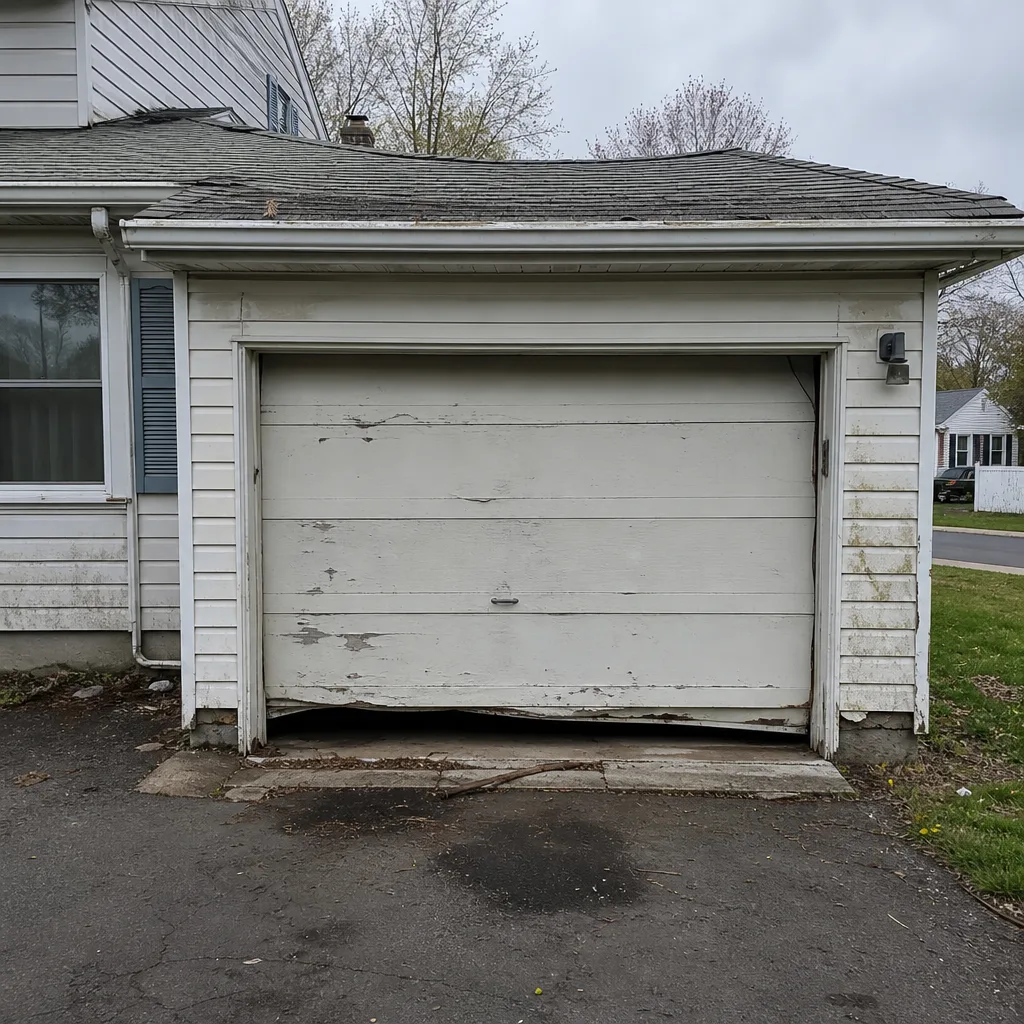 Before
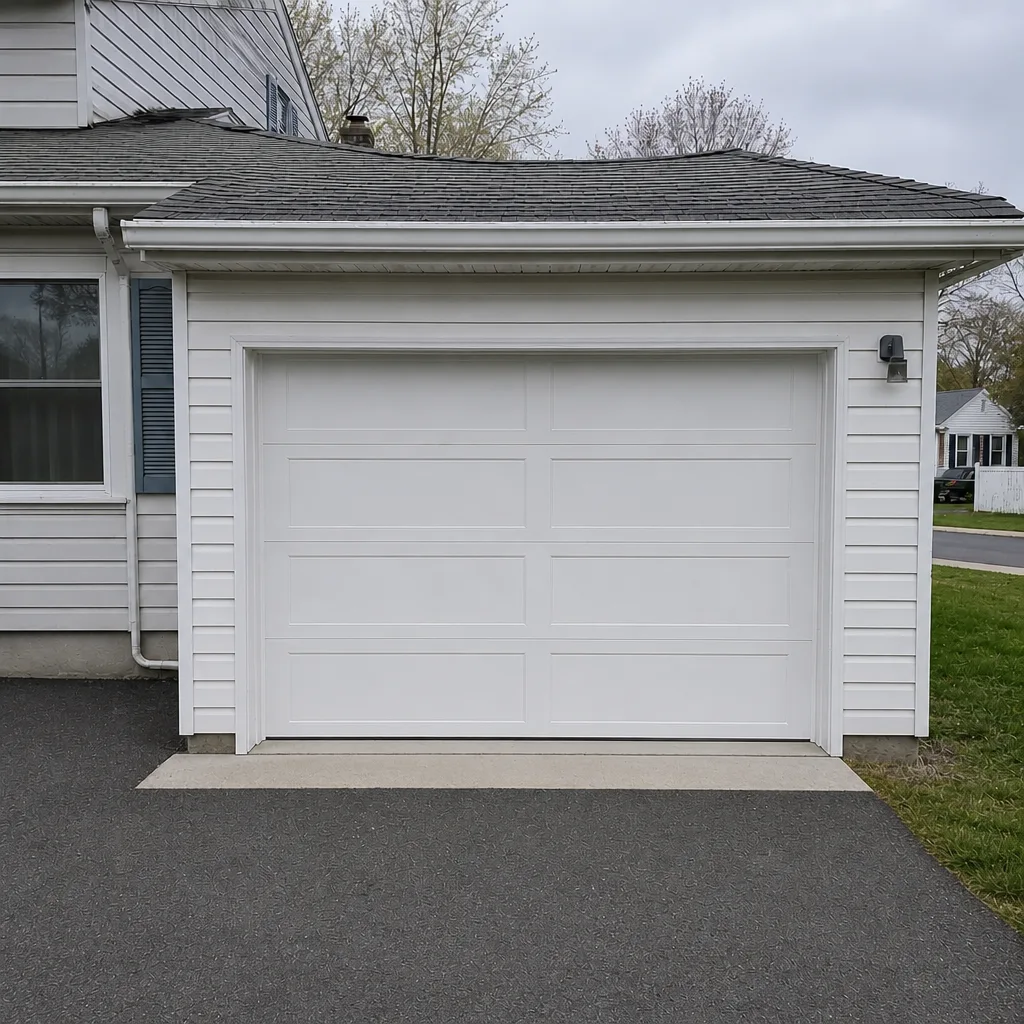 After
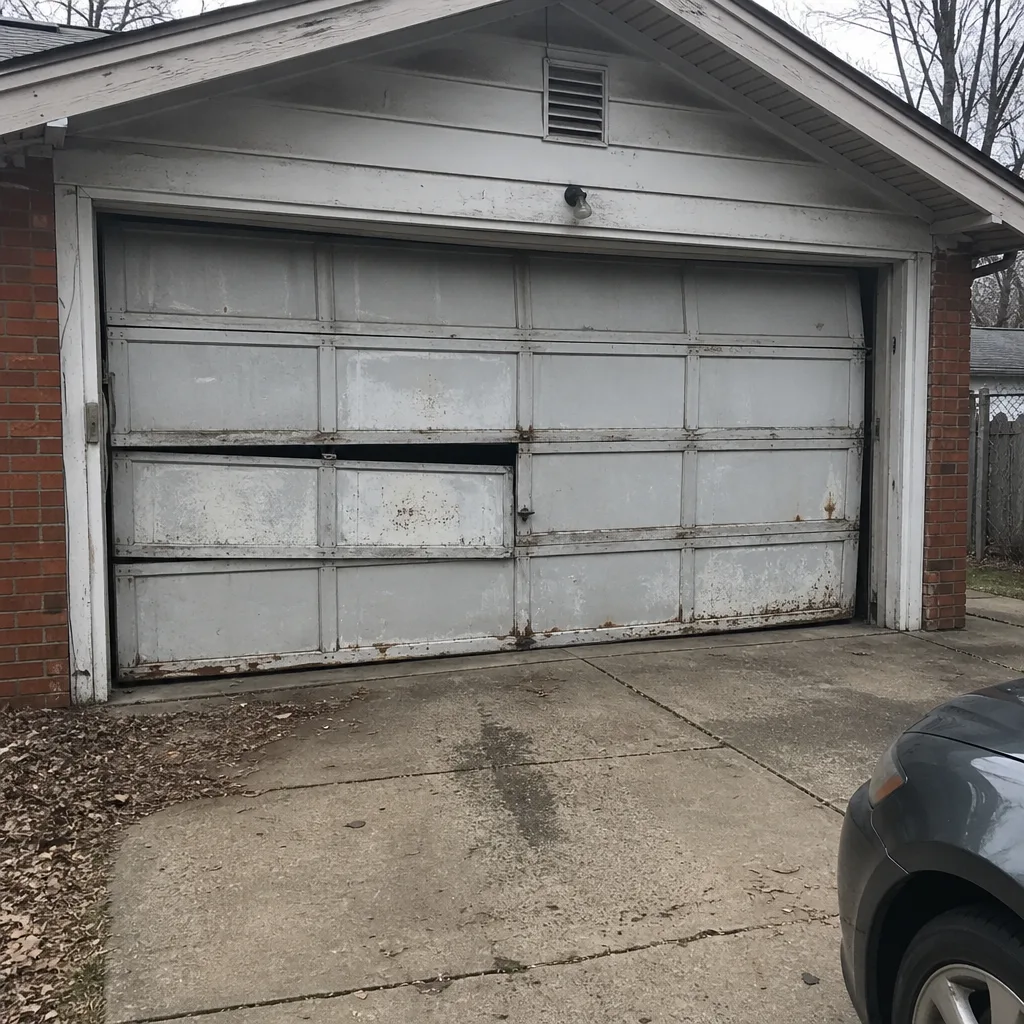 Before
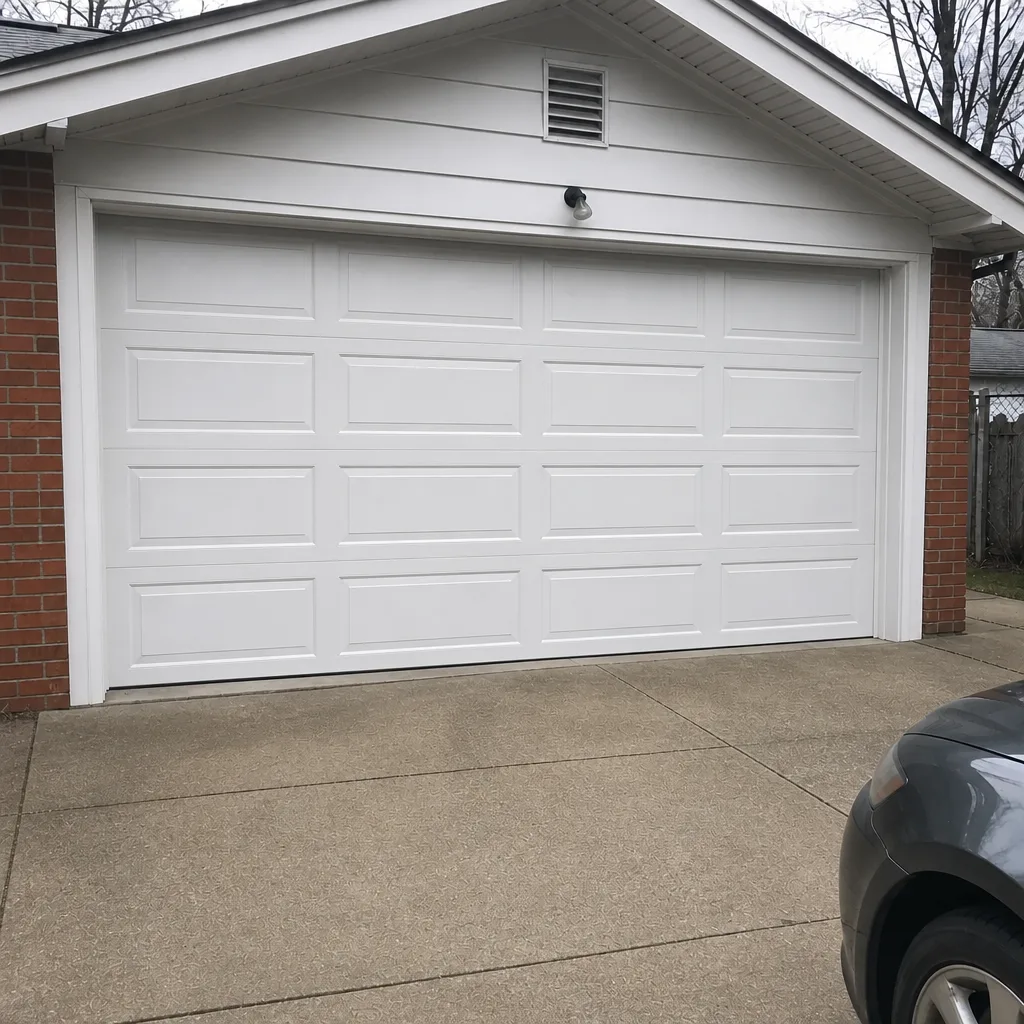 After
When to Call a Professional
Some situations leave no room for judgment calls. If you see a cable off the drum, a spring with a visible gap in the coil, a door hung unevenly after a loud bang, or a door that won’t close – that’s not a wait-and-see. If your car is trapped, if the door is open and you can’t secure it, or if the opener is running but the door is inert, it’s time to call. Those are the situations our emergency service exists for.
The scheduled side of things is broader than most homeowners expect. A grinding opener, an intermittent remote, a door that binds on one side, a rattling hinge set – these can be booked in a normal window and handled without disruption to the day. We work on every major brand, from the LiftMaster and Chamberlain units most modern Meriden homes run to legacy Craftsmans and Genies still doing their job.
Garage Door Repair Meriden offers free estimates in Meriden, and every job is quoted in writing and agreed before any work starts. Call (833) 679-1963 to talk through what you’re hearing and seeing.
Frequently Asked Questions
A visible gap in the coil, a door that suddenly feels heavier when lifted by hand, popping sounds from the spring area, or a door that won’t stay open at the halfway point are the main warning signs. A spring that’s still intact but one of these signals is present is a spring to stop using and get inspected. Call (833) 679-1963 and we’ll get an estimate out to you – estimates are free.
Usually not. Squealing rollers and rattling hinges are low-severity and can be scheduled. The exceptions are popping from the spring area (which is a warning of imminent spring failure) and grinding from the opener gear (which gets worse and more expensive if ignored). If you’re not sure which category your noise falls into, describe it by phone and we can tell you whether it can wait.
Yes, for the moving parts – hinges, rollers, and the spring itself. Use a garage door lubricant, not WD-40, and avoid applying anything to the tracks, which should be dry. Do not attempt to adjust the spring, the cables, or the opener’s internal force settings yourself; those are the components where injuries happen.
It means the safety reverse system has detected an obstruction. The usual causes are misaligned safety sensors, a broken sensor wire, or something in the door’s path. On older openers it can also be a limit switch out of adjustment. This is a schedule-it repair rather than an emergency, but don’t run the door repeatedly with the safety system triggering.
Emergency situations – snapped springs, off-track doors, doors that won’t close – get priority response, and we can usually get someone out the same day. Scheduled repairs are booked into a normal window. Call (833) 679-1963 with as much detail as you can about what you’re seeing and hearing, and we’ll give you a clear picture of timing and cost.
The written estimate you receive after the on-site diagnosis is the price for that job. If the technician finds something additional that changes the scope, they’ll stop and talk to you before doing anything that changes the number. Our prices are quoted and agreed before any work starts.
The Bottom Line
The warning signs on a garage door are specific and readable, but they’re easy to misread if you don’t separate one sound or symptom from another. Squealing and rattling are monitored. Grinding and uneven travel get scheduled. Popping, a coil gap, a heavy door, a cable off the drum, and a door hanging after a bang are call-today. The bottom line for Meriden homeowners is that the dangerous failure modes announce themselves before they happen, and the inexpensive ones get expensive if ignored. If you can describe what your door is doing, you’re most of the way to the right repair. Call (833) 679-1963 for a free estimate and let a specialist take it from there.
Written by the team at Garage Door Repair Meriden.