Last updated November 21, 2026
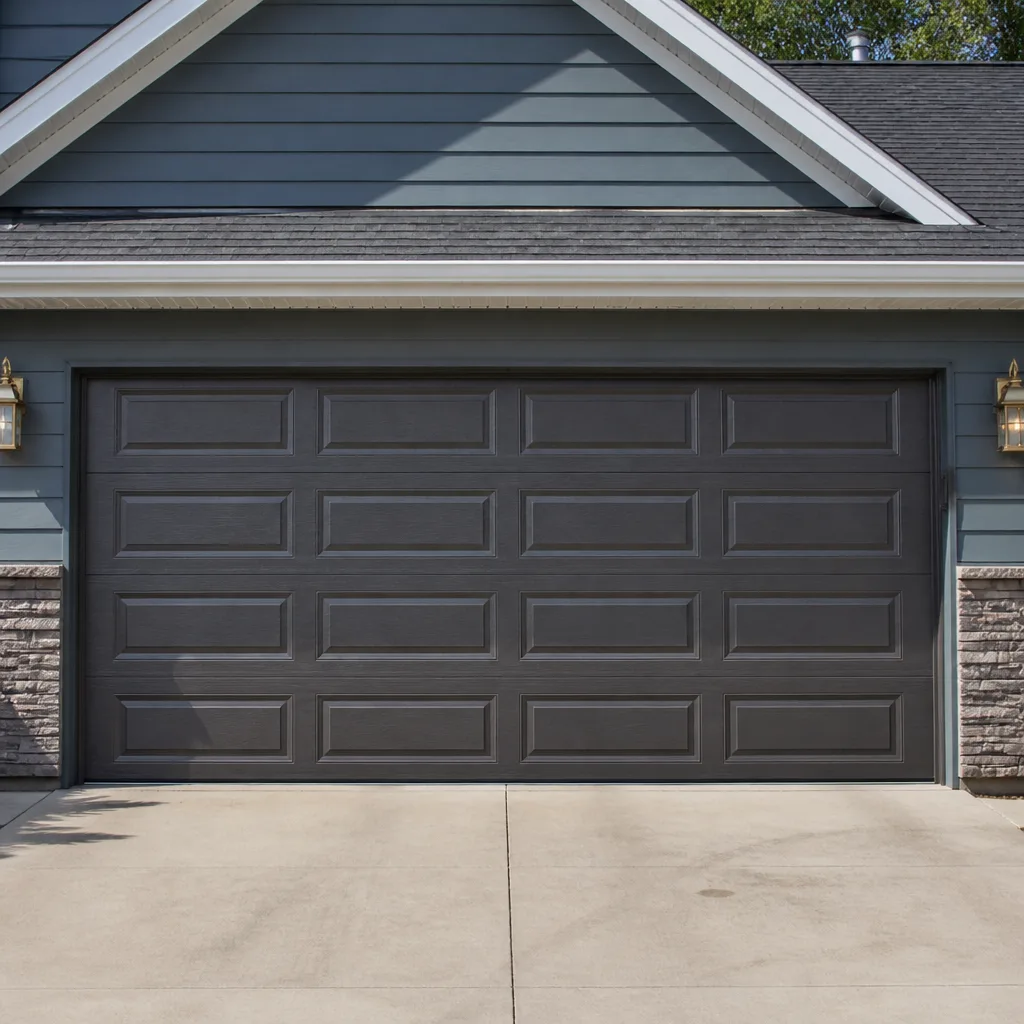 Raised-panel steel
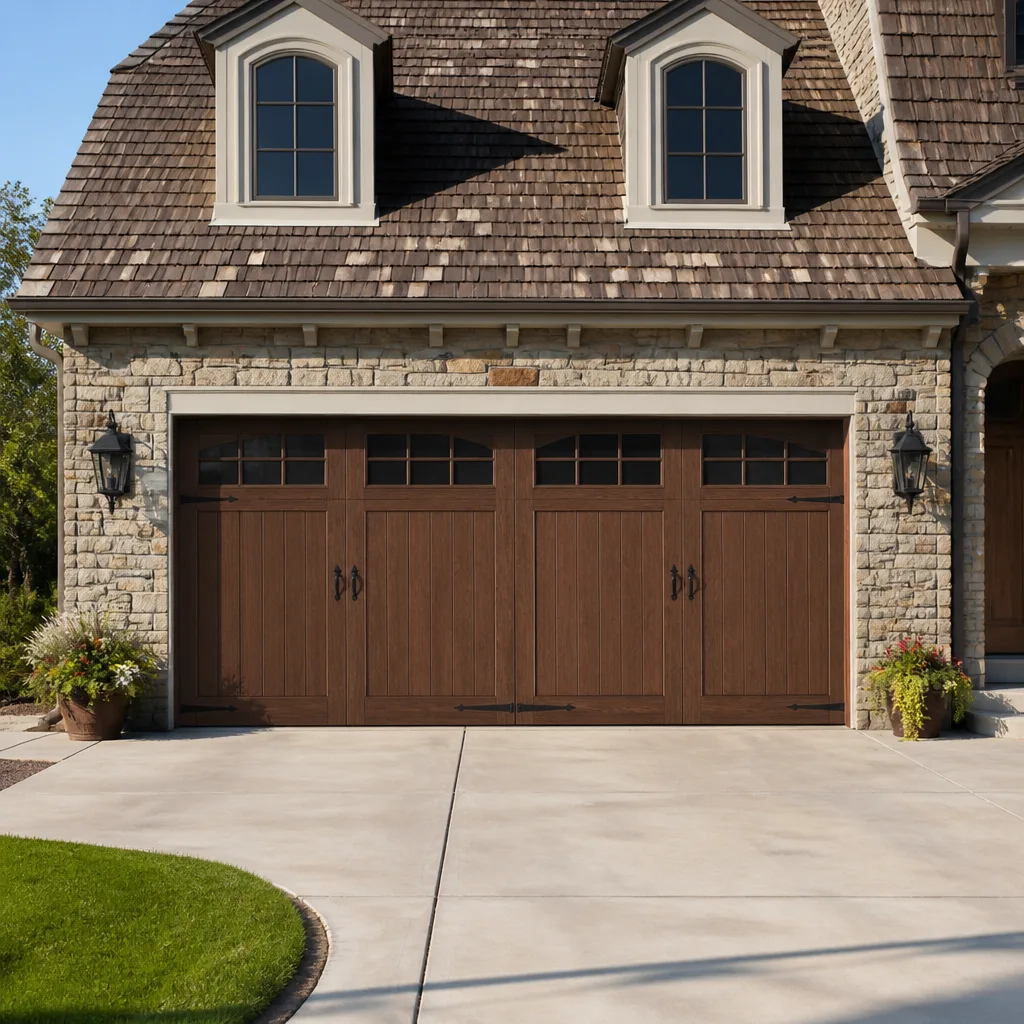 Carriage house
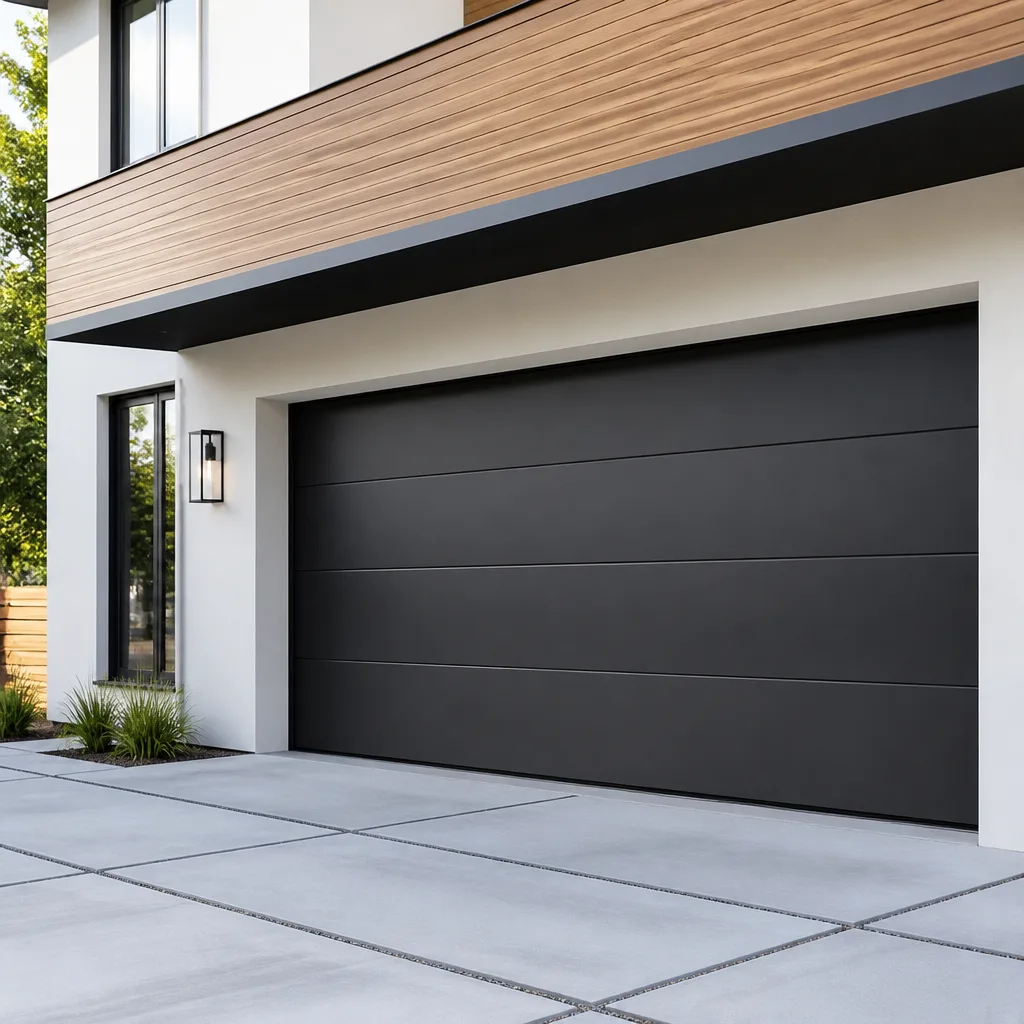 Modern flush
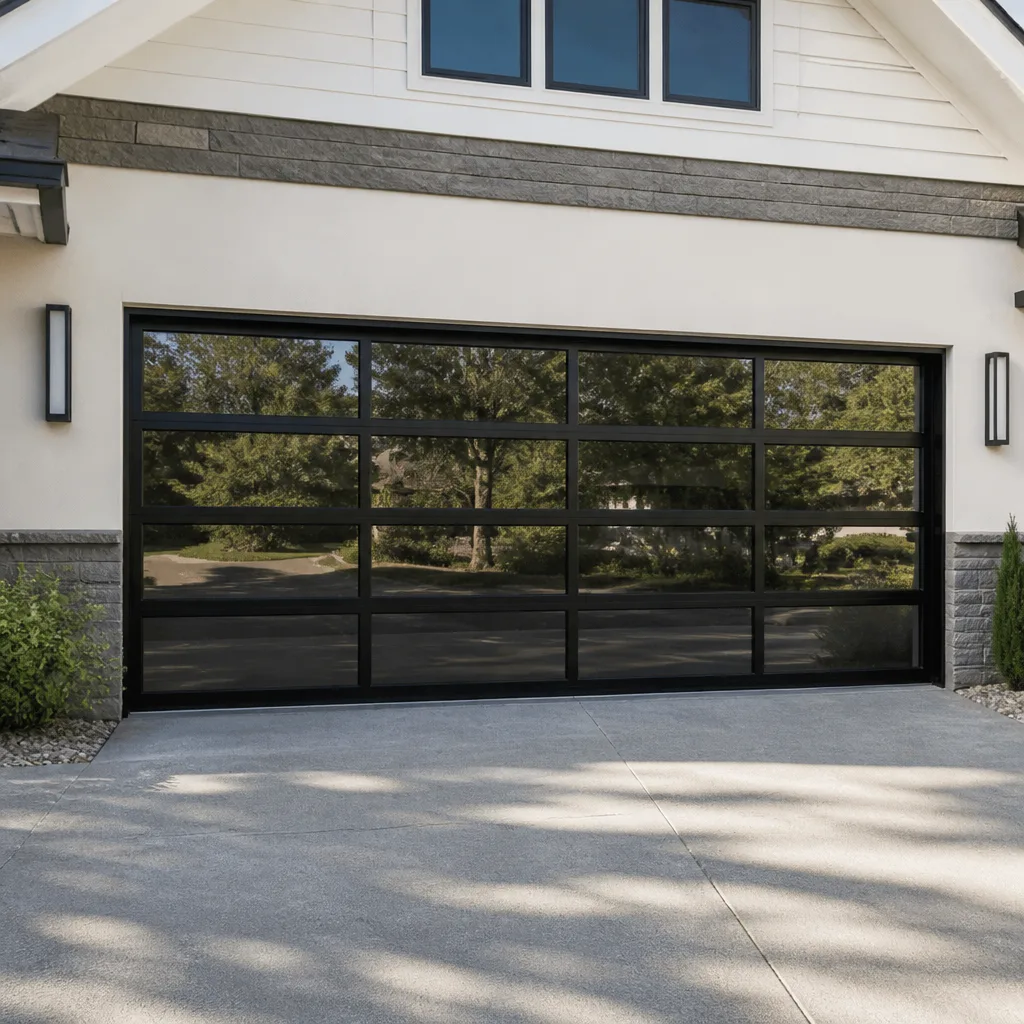 Full-view glass
 LiftMaster openers
 Chamberlain openers
Full 25-point door and opener safety check with every visit - springs, cables, rollers, tracks, and your LiftMaster or Chamberlain opener included
You get a price before we start. It does not change when the pro arrives.
Get your free estimateDIY vs Professional Garage Door: The Meriden Homeowner’s Decision Guide
Most garage door advice treats DIY versus professional as a skill question. Can you handle a wrench? Do you own a socket set? That framing misses the point. Garage door work isn’t one kind of job. Replacing a bottom seal is a weekend afternoon. Touching a torsion spring is a different category of risk entirely, one where a single slip can end a hand or worse. The two tasks look similar on a video and live in completely different risk universes. This guide gives Meriden homeowners an honest, task-by-task breakdown: what you can safely do yourself, what genuinely requires a trained technician, and where the real cost comparison lands once you account for tools, time, and callbacks.
Quick Answer
Some garage door work is safe for a competent homeowner: bottom seals, hinges, rollers, lubrication, and visual inspections. Torsion springs, cable drums, and opener power wiring require a trained technician, because those components store lethal energy or connect to household current. Everything else sits on a spectrum. The right call depends on the specific task, your door’s age, and your actual mechanical experience, not on a blanket “always DIY” or “always call a pro” rule. For anything involving springs or a door that won’t stay on track, a Garage Door Repair Meriden technician is the right contact.
Styles & brands we work with
- Raised-panel steel
- Carriage house
- Modern flush
- Full-view glass
- LiftMaster openers
- Chamberlain openers
Table of Contents
- Why This Is a Risk Question, Not a Skill Question
- What’s Genuinely Safe to DIY (and What Isn’t)
- The Spring Problem: Why Torsion Work Is Different
- The Real Cost Comparison: Tools, Time, and Callbacks
- How Connecticut Home Insurance Treats Self-Performed Work
- The High-Cycle Spring Scenario Where DIY Is Always Wrong
- Your Three-Variable Decision Framework
- Meriden-Specific Context: Climate, Housing, and Doors
Why This Is a Risk Question, Not a Skill Question
Garage doors and their openers are the heaviest moving assemblies in a typical American home. A standard single-car door weighs well over a hundred pounds; a double-car door can run several hundred. That weight is held in suspension by springs under enormous tension. When the system is balanced, the door moves with a few pounds of force. When something fails, that stored energy releases fast, and it doesn’t care how handy you are.
This is why the DIY-versus-professional decision should be made task by task. A homeowner who’s rebuilt engines and remodeled bathrooms is genuinely capable of replacing a bottom weather seal. That same homeowner should not touch a torsion spring, and it has nothing to do with intelligence or experience. It has to do with the fact that the component is designed to hold hundreds of pounds of torque, and the tools and techniques required to release that torque safely are not things you pick up from a fifteen-minute video.
The honest framing is a risk ladder:
- Low risk: Lubrication, bottom seals, hinges, rollers, visual inspection. Genuinely safe for a careful homeowner.
- Moderate risk: Track adjustment, opener programming, remote and keypad setup. Doable with care, but easy to get wrong in ways that cause premature wear.
- High risk: Torsion springs, extension springs, cable drums, and anything involving the lift cables. These require technique and tools most homeowners don’t own and shouldn’t try to improvise.
- Electrical risk: Opener power wiring at the panel or a new circuit. This is a licensed-electrician question, not a garage door question.
In Meriden, we see all four categories in a given week. The low-risk items are usually genuinely DIY-friendly. The high-risk items are where homeowners get hurt, and where a botched job sometimes costs more than the original repair would have. Knowing which bucket your task falls into is the whole decision.
What’s Genuinely Safe to DIY (and What Isn’t)
A large share of the small stuff on a garage door is entirely within reach for a homeowner with basic tools and a cautious temperament. In our experience, the jobs below don’t require a specialist and don’t put anyone at meaningful risk if done carefully.
Safe for a competent homeowner:
- Bottom weather seal replacement. Slide out the old seal, slide in a new one, trim the ends. No stored energy beyond the door’s resting weight.
- Lubrication. A garage door has rollers, hinges, and a track that all benefit from a proper garage door lubricant a couple of times a year. This is the single highest-value DIY task you can do.
- Hinge and roller replacement. Standard hinges bolt on; rollers slide out and in. The one rule: never remove a hinge while the door is under tension from a broken spring.
- Visual inspection. Look at cables for fraying, springs for gaps, and the door’s balance using the manual release.
- Opener remote and keypad programming. On LiftMaster, Chamberlain, Genie, and Craftsman openers, this is a matter of following the manual.
Requires a trained technician:
- Torsion spring replacement. The spring above the door holds hundreds of pounds of torque. See the next section.
- Extension spring replacement. Lower tension than torsion, but a failed extension spring can whip a cable across the garage. Not a first-timer job.
- Cable and drum work. Cables are under tension from the spring and can cut like a blade when they snap. Never handle them without first relieving the spring tension correctly.
- Opener replacement or power wiring. The low-voltage control side is fine to program. Anything connecting to household 120-volt power is an electrician question.
- Off-track doors. A door that’s come off its track has likely bent a hinge or stressed a cable. Pushing it back by hand is where people get hurt.
For anything on the second list, garage door repair is the right call, and the price is agreed before any work starts.
The Spring Problem: Why Torsion Work Is Different
This is the section that separates an honest guide from a marketing page. Torsion springs are the reason garage door repair has a body count. Not because homeowners are careless, but because the physics are unforgiving. A torsion spring above a standard residential door is wound to somewhere around seven to nine full turns, storing enough torque to lift the door with a pull of one hand. That energy doesn’t dissipate overnight and doesn’t care whether you’ve watched the video three times.
When a torsion spring lets go, the torsion bar spins freely and the door drops if the cables aren’t holding. The two failure modes:
- Uncontrolled release during installation. If you’re winding a spring and your winding bar slips, the bar becomes a spinning projectile, and the spring can release its full store of energy in an instant. The winding bars required for this job are specific steel rods; improvised tools are how people get hurt.
- Cable snap after spring failure. When a spring breaks, the cable on that side goes slack, then can snap tight against the door or the drum. A steel cable under tension snaps with enough force to cut through a glove and into the hand beneath.
Both failure modes are why professional technicians wear eye protection, use proper winding bars, and can identify a spring’s wire gauge and inside diameter by sight. That identification matters because a spring has to be replaced with the same wire size, inside diameter, and length. A spring that’s even one gauge off will either under-lift or over-stress the door. We work on torsion springs constantly, it’s a named core service, and the reason we treat it seriously is exactly the reason a homeowner shouldn’t.
If your spring has snapped, call a professional. Our garage door spring repair service covers single-spring replacements and matched pairs (which cost about double, since both springs are usually replaced together to keep the door balanced). Prices for a single spring replacement in this area typically run in a range you can confirm with a free estimate, and the written price is what you pay.
The Real Cost Comparison: Tools, Time, and Callbacks
The DIY-versus-professional cost comparison most homeowners run is “the part plus shipping versus the quoted repair.” That comparison is incomplete. Add tool acquisition, the time the door is out of service, and the real possibility of a callback, and the gap narrows considerably. Here’s the honest breakdown for the most common tasks.
- Bottom seal DIY: Part cost is modest, tools are minimal, and the job is quick. This is a genuine DIY win.
- Single torsion spring professional: Includes the matched-gauge spring, the technician’s labor, and the diagnosis that the second spring needs replacing too. Estimate before any work starts.
- Winding bars alone: The correct tools cost more than a homeowner expects and have no other household use, which is often the hidden cost of a spring job.
- Callback repair after a DIY spring job: The most expensive outcome. A door that’s unbalanced or off its cables after a failed DIY attempt costs more than the original repair, because the door now needs re-tensioning plus whatever was damaged when it dropped.
- Opener diagnosis DIY: Homeowners often replace the whole opener when the actual fault was a stripped gear or a misaligned safety sensor. garage door opener repair usually costs far less than a new unit.
In our experience, the highest-cost callbacks are the ones where a homeowner replaced a spring and got the gauge slightly wrong. The door looks fine until it cycles a few hundred times, then the rollers wear unevenly, the opener strains, and the door is back to performing badly. The DIY bill is now a fix plus a re-fix, and the door’s been off-line for days in between.
Two rules of thumb: if the job requires a tool you don’t already own and won’t use again, price that tool before deciding. And if a botched job would stop your door from shutting at the end of the day, treat the professional route as the only route.
How Connecticut Home Insurance Treats Self-Performed Work
This is where most DIY guides go quiet. Homeowners generally assume that if they do the work, it’s their house, and insurance covers whatever happens. That assumption is not safe, and in Connecticut it’s worth understanding before you pick up a winding bar.
Here’s the general picture, not legal advice: Connecticut homeowners policies typically respond to accidental damage from sudden events. They do not typically respond to damage caused by defective workmanship performed by the homeowner, and a policy can decline a claim if the damage is traced back to a repair that wasn’t done to code or to the manufacturer’s specification. The exact language varies from policy to policy, so if this matters for your situation, ask your own insurer directly rather than relying on general rules.
The point isn’t that insurance will fail you. The point is that a self-performed repair is not automatically covered just because it happened in your house. Three practical implications:
- Ask before you start. A five-minute call to your agent about whether a planned repair is covered under your policy is cheaper than a denied claim.
- Document what was done. Keep the receipt for any part you install. If a claim ever comes up, the trail matters.
- A licensed and insured professional carries their own liability. When we connect you to a local pro, they’re licensed and insured as their state requires, which means a problem with the job is their responsibility, not your policy’s.
In Meriden, this matters for older homes where the garage door is original to the house and the code expectations have moved since it was installed. Anything involving the door’s structural connection to the frame, or the opener’s electrical supply, is a job with insurance-shaped consequences if it goes wrong.
The High-Cycle Spring Scenario Where DIY Is Always Wrong
There’s a scenario where DIY spring work is wrong even for a genuinely skilled homeowner. It’s the door with heavier-than-standard springs, and it happens more often in Meriden than you’d expect.
Standard residential torsion springs are rated for tens of thousands of open-and-close cycles. Spring life is measured in cycles, not years, which is why a door used six times a day wears its springs faster than a door used twice a day. When a door is spec’d for heavier use (larger doors, thicker panels, doors with glass or insulation, doors on homes where the garage is the primary entry) the springs installed are often the heavier-duty variant. Those springs carry more tension and are less forgiving during installation. If a homeowner has to replace one, the spec has to match exactly, and mistakes are less recoverable than on a lighter spring.
How to identify whether you’re in this scenario:
- Check the spring’s winding bars. Heavier springs sometimes need a stronger winding bar setup.
- Look at the door’s width and thickness. A double-car door with insulated panels almost certainly has heavier springs than a single-car door.
- Count the cycles the door sees per day. A garage used five or more times daily is high-cycle use.
- Look at the spring’s color-coded winding cone. The color is often a gauge indicator; if the paint is worn off or illegible, the spring has to be measured by a technician.
None of this is a rule against ever replacing a spring yourself. It’s a rule that the harder the spring is to spec, the more the professional route pays for itself in one visit. In our experience, the springs we see on Meriden homes in the heavier-use category are the ones where a wrong-gauge replacement leads to a second callback within a few months.
Your Three-Variable Decision Framework
Instead of a blanket answer, use this three-variable framework. Score your situation on each, and the recommendation becomes obvious.
Variable 1: Task type.
- Lubrication, seal, hinge, roller, remote programming: DIY.
- Track adjustment, opener diagnosis: DIY is possible but the professional route is often cheaper once the diagnosis is done.
- Springs, cables, drums, off-track doors: professional.
- Opener power wiring: licensed electrician.
Variable 2: Door age.
- Door under ten years old and cycling cleanly: the DIY ceiling is higher, because the parts are recent and replaceable.
- Door over fifteen years old or with mixed brand parts: professional. Older doors often have spec differences that aren’t obvious until a part is in hand.
- Door with any prior repair history: professional. You don’t want to be the second set of hands on a door someone else has already modified.
Variable 3: Your mechanical experience.
- You’ve rebuilt mechanical systems and own the right tools: the DIY ceiling rises for the low and moderate categories.
- You’ve replaced light fixtures and hung a shelf: the DIY ceiling is low and stops at task type 1.
- You’ve done neither: use the professional route for anything spring-adjacent, even if it looks simple on video.
The decision rule: professional whenever task type is high-risk, and professional whenever door age or mechanical experience pushes two or more of the other variables into “caution.” When in doubt, that second rule catches the cases where someone competent is about to attempt something risky.
One more variable worth naming: brand familiarity. Doors and openers from Amarr, Wayne Dalton, Craftsman, and Raynor have their own specs and their own replacement parts. If your door is one of those brands and you’re attempting a mid-risk job, look up the exact model and be certain the part matches before you start. If you can’t identify the model, the professional route is faster than the research.
Meriden-Specific Context: Climate, Housing, and Doors
Meriden’s climate matters more to garage doors than most homeowners realize. The freeze-thaw cycle that hits central Connecticut every winter works on the door’s metal components and the concrete slab beneath. Doors that sit tight in July can stick in January, because the slab lifts and the bottom seal compresses. This is one reason bottom seal replacement is the highest-value DIY job on the list, and one reason we see a cluster of “door won’t close flat” calls in early spring.
Meriden’s housing stock plays a role too. A good share of the city’s older homes have original or mid-age garage doors, and the average door on those homes has been through a lot of seasons of weather and a lot of cycle count. Doors in neighborhoods across the city, whether near the center or out toward the edges, age the same way. When you’re evaluating a door for DIY, check its age and its cycle count before you decide.
Humidity in summer is the other factor. Moisture works on hinge pins and rollers, and doors that haven’t been lubricated since fall will seize on metal-on-metal wear by June. A twice-yearly lubrication routine is a fifteen-minute DIY task that pushes a door’s life out by years.
Meriden also sees the standard American pattern of the garage being the primary entry point in newer homes. When the garage door is where you enter the house every day, the cycle count runs high, the springs wear fast, and the door becomes a genuine operational problem the moment it fails. That raises the stakes on every DIY decision.
If you’re evaluating a Meriden door and want a second set of eyes on a specific task, we’re happy to look at it with you. Estimates are free, and there’s no pressure to hand over the job.
Common Mistakes to Avoid
- Winding a torsion spring without a proper winding bar. Improvised tools are how most torsion-spring injuries happen. If you don’t own the right bars, don’t start the job. The tool is not optional.
- Replacing one spring of a matched pair. Two springs are installed as a matched set because the door needs even lift. One new spring and one old spring unbalances the door and stresses the opener. Replace the pair.
- Pushing an off-track door back by hand. A door that’s come off its track has usually bent a hinge or stressed a cable. Pushing it back into place can cause the cable to snap. Call a technician instead.
- Replacing an opener when the real fault is a sensor or gear. A dead opener and a misaligned safety sensor look similar from the outside. A diagnostic before replacement saves most homeowners the cost of a new unit.
- Skipping lubrication because “it works fine.” Metal-on-metal wear doesn’t announce itself until a hinge fails or the door starts to lag. Two fifteen-minute lubrication sessions a year is the highest-return DIY habit on the list.
- Assuming homeowner insurance covers a botched DIY repair. Policies typically exclude damage from defective workmanship. Ask your own agent before you start anything mid-risk or higher.
- Ignoring the door’s model number. Parts on an Amarr, Wayne Dalton, Craftsman, or Raynor door are specific to the model and sometimes to the year of manufacture. Without the model number, you’re guessing on the part.
See the difference
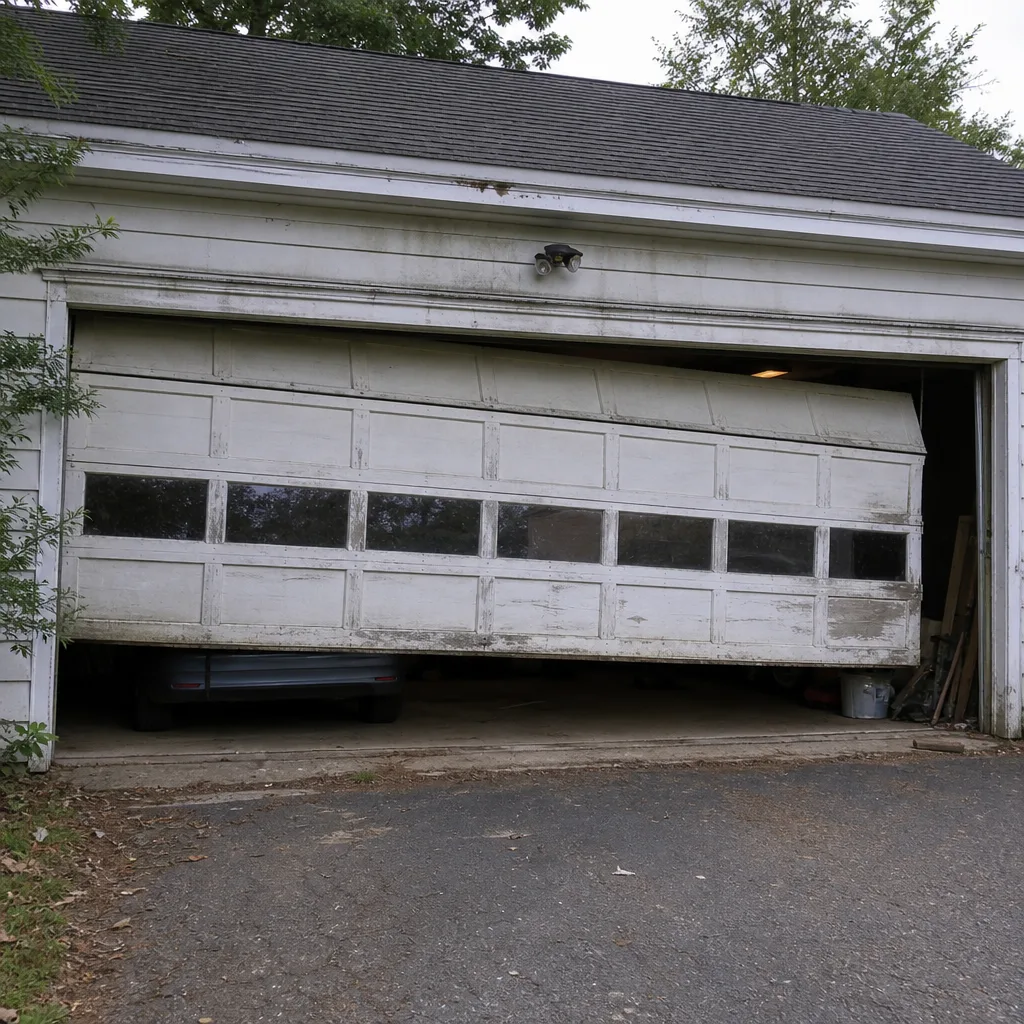 Before
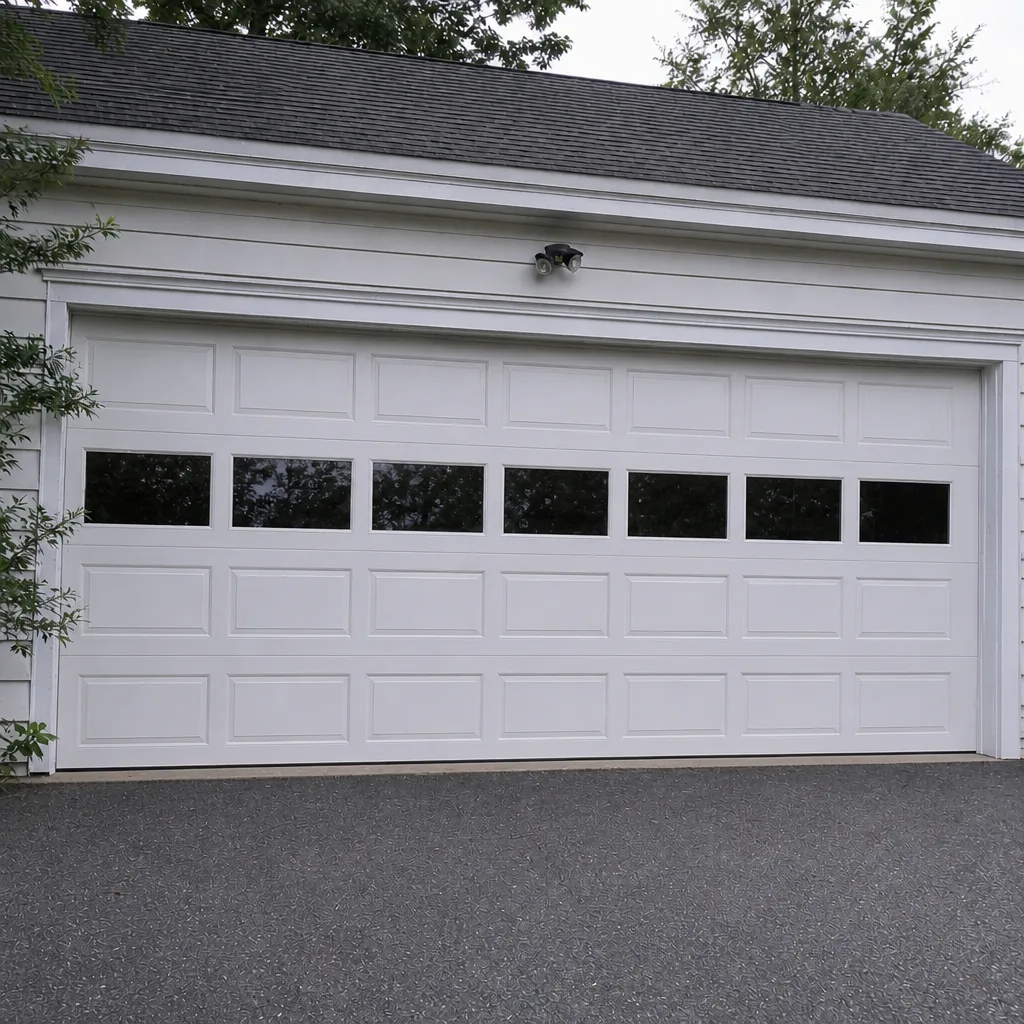 After
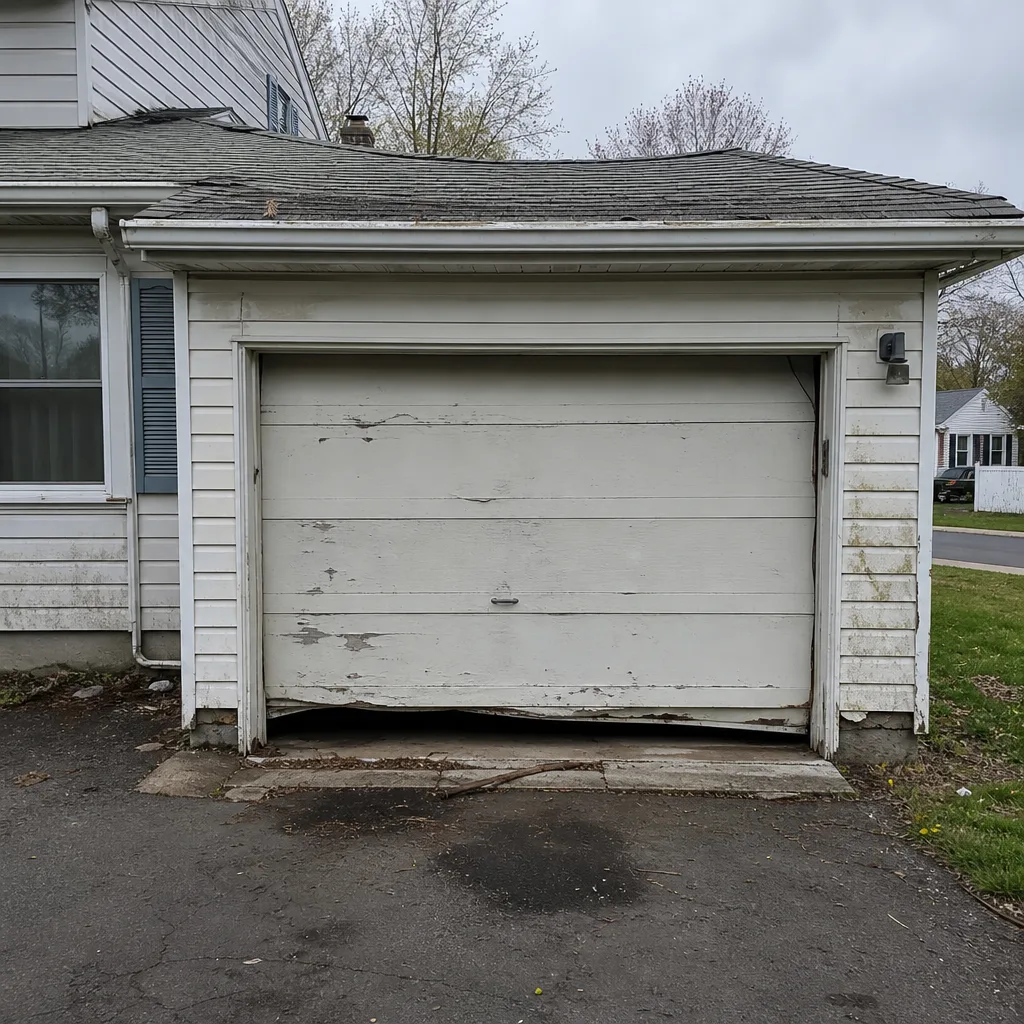 Before
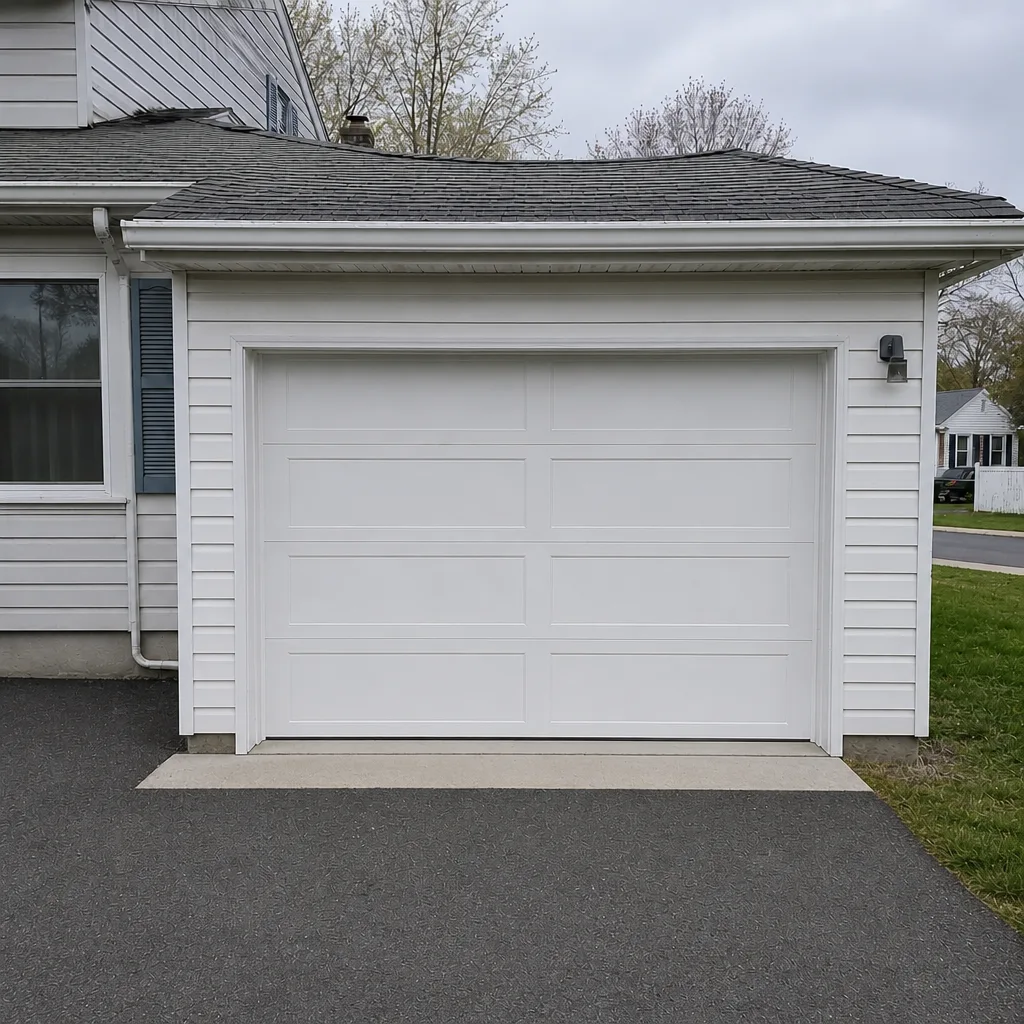 After
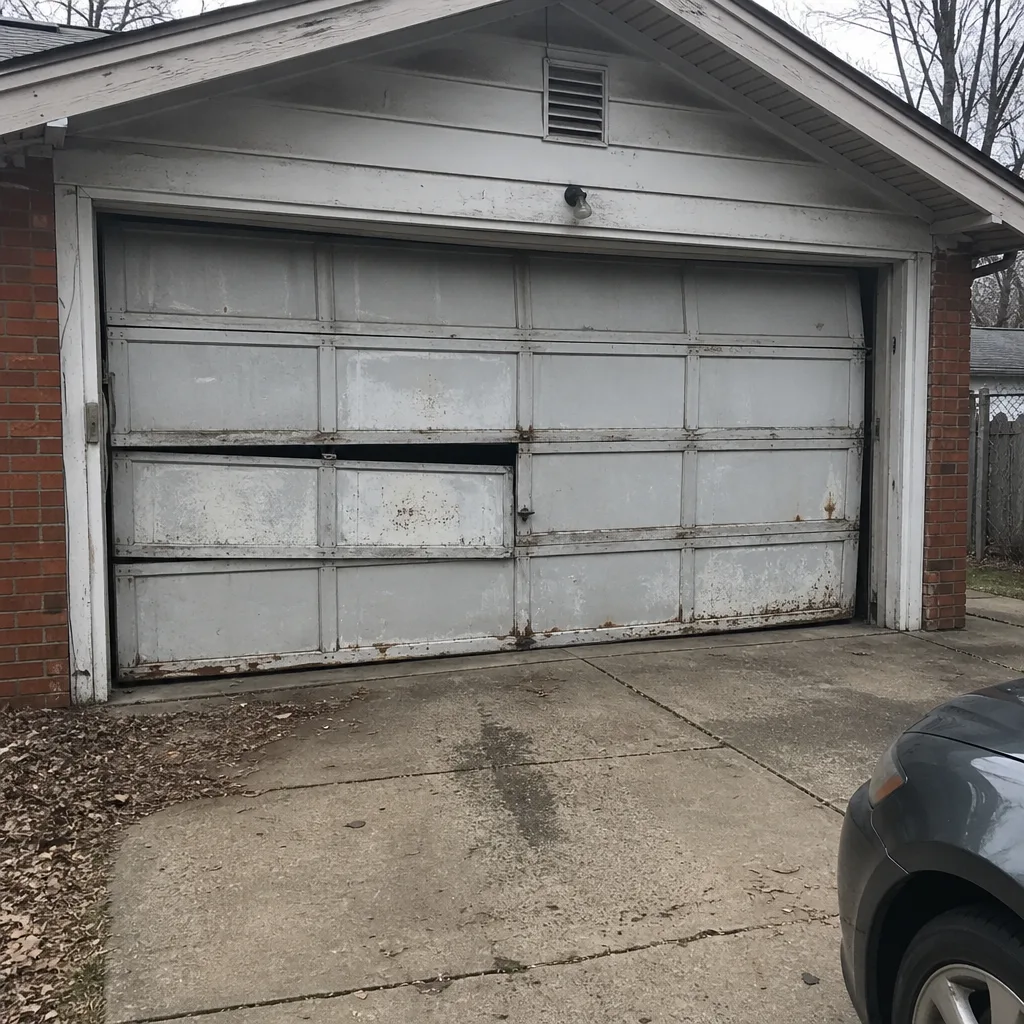 Before
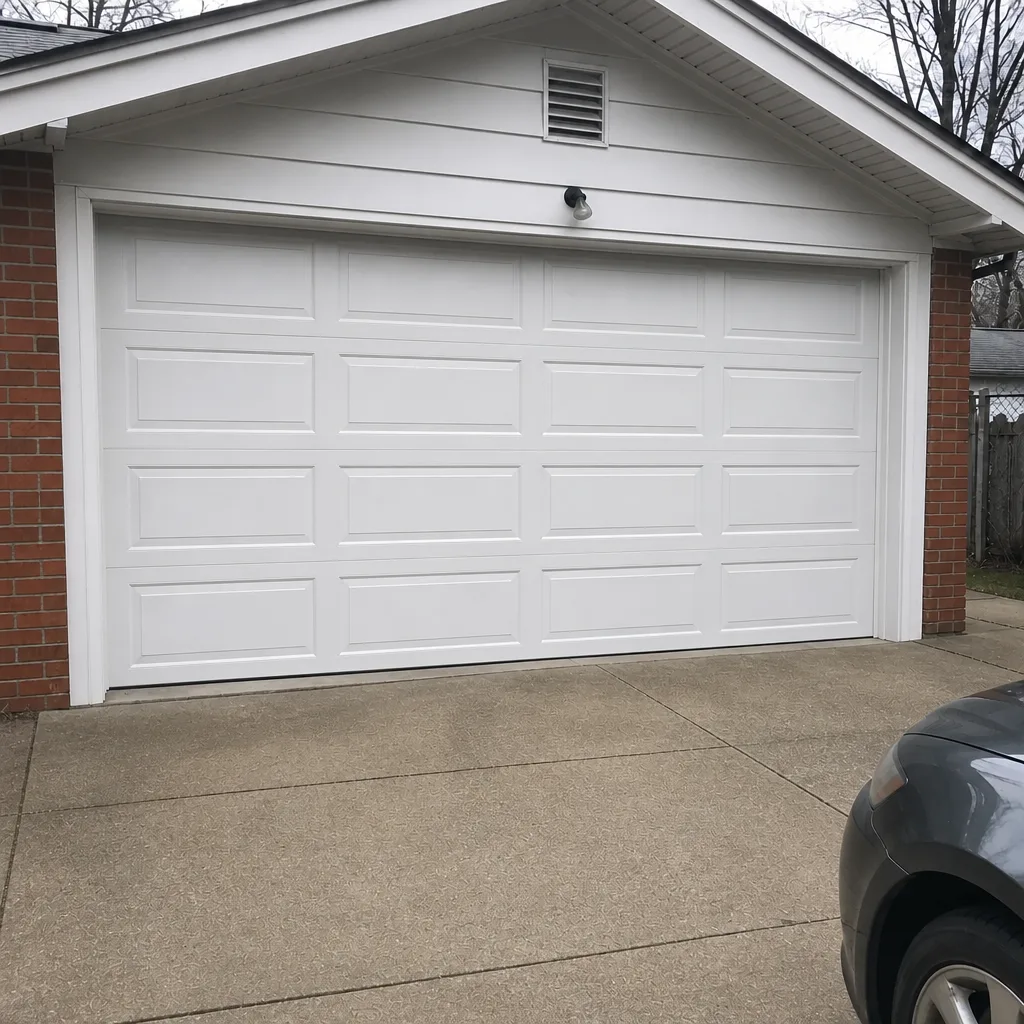 After
When to Call a Professional
Call a professional in any of the following situations: the door has a broken torsion or extension spring, the cables are frayed or off their drums, the door is off its horizontal or vertical track, the opener has lost power or is making a grinding sound, or the door won’t stay balanced in a half-open position. All of these carry injury risk if attempted by a homeowner, and all of them are easier for a technician to diagnose. If you’re not sure whether your situation is on this list, err on the side of calling. Our technicians have up to 12 years of experience, we service every major brand including Amarr, Wayne Dalton, Craftsman, and Raynor, and we offer same-day service for repair calls in the Meriden area. We also run emergency garage door service for the situations that can’t wait: the door won’t close at night, or won’t open before work. Garage Door Repair Meriden offers free estimates in Meriden, call (833) 679-1963.
Frequently Asked Questions
You can, but we don’t recommend it. A torsion spring stores enough torque to cause serious injury in the fraction of a second it takes a winding bar to slip, and the spring has to be matched by wire gauge, inside diameter, and length. Even experienced DIYers without specialized winding tools are taking a real risk. A trained technician does this work safely and matches the spring to your door. If your spring has snapped, call (833) 679-1963 for a free estimate in Meriden.
Spring repair is priced by the spring, and a matched pair (which is the standard replacement) costs roughly twice a single spring. We quote a written price before any work starts, so you know the number before the technician picks up a tool. Estimates are free. Call (833) 679-1963 to get yours.
Usually not, if the damage traces back to defective workmanship done by the homeowner. Policies typically respond to sudden accidental damage, not to damage caused by a repair that wasn’t done to code or to manufacturer spec. Ask your own insurer before starting anything mid-risk or higher, and keep the receipts for any parts you install.
The local professional we connect you to is licensed and insured as their state requires. That means if something goes wrong with the job, it’s their liability, not your homeowner’s policy. Ask for proof of coverage when you book, it’s a fair question and a professional answer is easy.
Often, yes. We offer same-day service for repair calls, and emergency garage door service for the situations that can’t wait, such as a door that won’t close at night or won’t open before work. Call (833) 679-1963, describe what the door is doing, and we’ll tell you what’s available.
Yes, for low-risk tasks. Replacing a bottom weather seal, lubricating hinges and rollers, swapping a hinge or a standard roller, and programming a new remote are all genuinely safe for a careful homeowner with basic tools. Anything involving springs, cables, or the door’s connection to household power is where the DIY route stops being worth the risk.
No. We quote a written price and agree it before any work starts. If the diagnosis on arrival reveals a different problem than what was described on the phone, we’ll walk you through what we found and give you a fresh estimate before we proceed. The written price is the price.
The Bottom Line
DIY versus professional isn’t a skill question in Meriden any more than it is anywhere else. It’s a task-by-task risk question. Seals, lubrication, hinges, and remote programming are genuinely safe for a competent homeowner, and worth doing yourself. Torsion springs, cables, off-track doors, and opener power wiring belong with a specialist, because the failure modes are not recoverable by caution. The real cost comparison usually lands where the part plus the tool plus a possible callback costs more than the professional visit, so the professional route is often the cheaper one in practice. Our technicians have up to 12 years of experience, we service every major brand, and we handle anything from a snapped spring to a full new door installation. We also run emergency garage door service, because a garage door that won’t close isn’t just an inconvenience.
Ready to Hand It Off?
If your own decision framework points to professional, we make it easy. Call (833) 679-1963 for a free estimate, describe what the door is doing, and we’ll book a visit. Written price before work starts, same-day service for repair calls, and emergency garage door service when the door genuinely can’t wait. One call, one specialist, back up and running.
Written by the team at Garage Door Repair Meriden.